Tuesday, July 31, 2007
Friday, July 27, 2007
Mostly food.
Hummus on a shady picnic table in Nablus
Knaffe (cheese, corn meal, lots of honey) - a Nablus specialty
Maklube, or "Upside Down Dish" in Aida Camp - Rice, chicken, peas
Looking back from a taxi: the wall and a sniper tower are next to these family homes in Aida refugee camp, Bethlehem. The whole camp is always being watched by unseen eyes.

Balata Refugee Camp (Nablus, Palestine)
Balata Refugee camp - one of the hardest hit by the Israeli military, also home to many fighters resisting Israeli occupation. Many families have lost members to Israeli military violence or military prison. Images of Balata's graveyard below...
Boys grow to be fighters...
Balata camp has quadrupled in population but gained no land since its founding 60 years ago. Construction is therefore vertical.

Aida Refugee Camp - Bethlehem, Palestine
Israelie Apartheid Wall (Bethlehem, Palestine)
Saturday, September 02, 2006
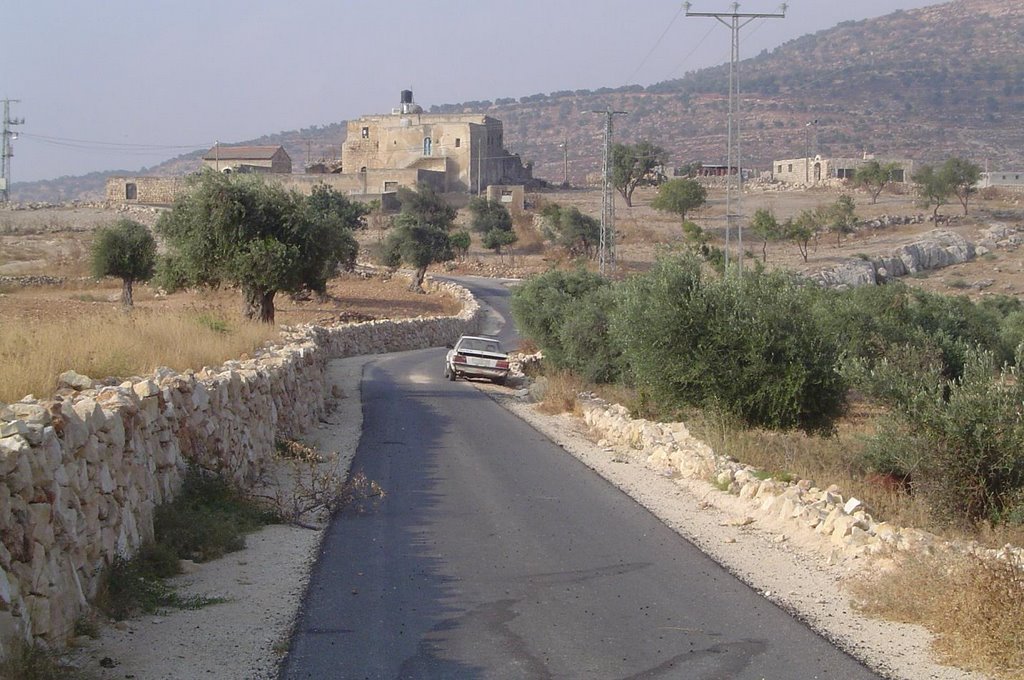
Dair Ballut Village

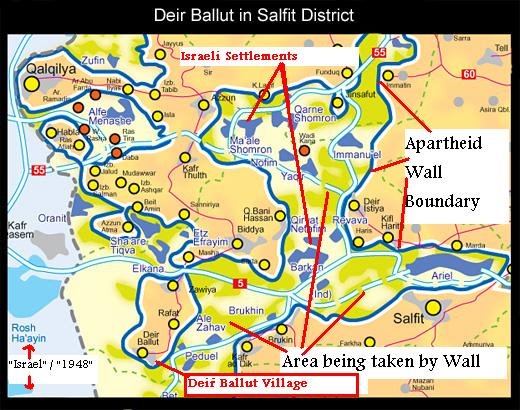
CLICK FOR A MAP of how the "Apartheid Wall" or "Separation Barrier" and nearby Israeli settlments enclose Deir Ballut village. Part of the displayed path of the barrier is still under construction (we could see the equipment working from our host's front porch). See this report on past demonstrations and resistance to the Wall's construction. Local resistance succeeded in saving some of the land that would have been lost behind the wall.
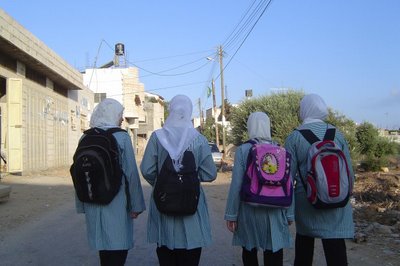
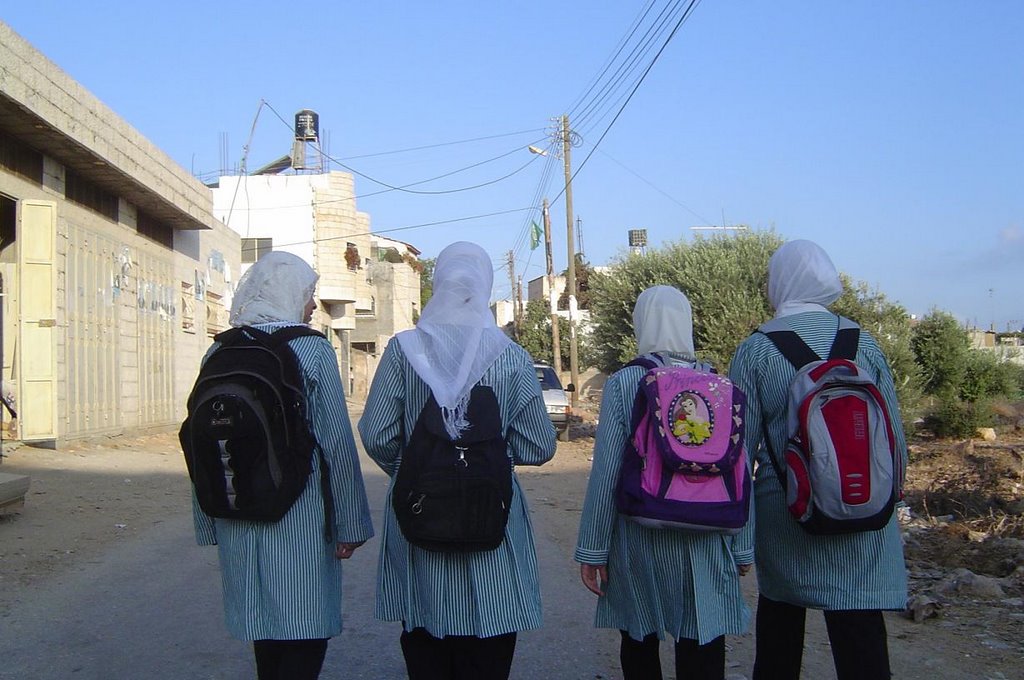
Girls on the way to the first day of School in Dair Ballut. Boys schools will soon be closed due to a teacher's strike. Palestinian teachers have been working without pay since the US-led sanctions went into effect against the Palestinian government in February. Many people are saying, "The financial crisis hurts regular people, not Hamas." Whether it hurts Hamas or not, the sanctions regime impacts the entire population's school, medical, and police services.

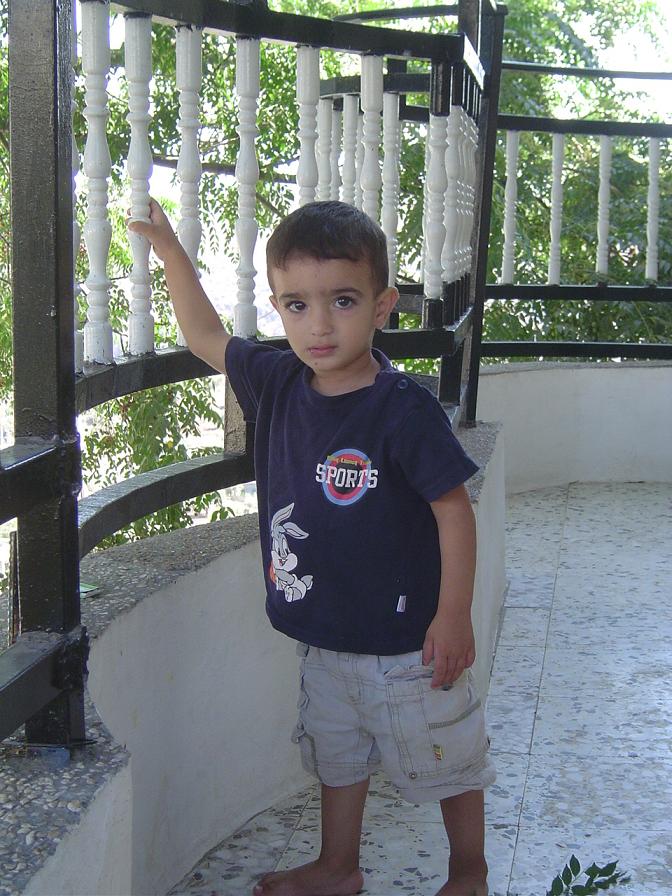
This boy's father is unemployed due to financial crisis and Israeli closure. I found his father to be energetic, clean-cut, and in his best working years...the traditional breadwinner of the Palestinian family (although more and more Palestinian women are working outside the home). He struggles to make ends meet from Olive trees on land that was rescued through protest from anexation behind the "Apartheid Wall" that now strangles the village.
Instead, only the grandparents provide income. The grandmother brings in some money by sewing. The grandfather works at a factory in a neighboring Palestinian village called Kfarr Qassam. Kfar Qassam is inside the 1948 border (i.e. in "Israel."). He is one of the lucky few who have permission to work inside Israel legally, (many sneak in) but he can only stay legally during daylight hours.
The trip from Dair Ballut to Kfar Qassam should take just a few minutes. Kfar Qassam is just a few miles away and is easily visible from Dair Ballut's hilltops. However, he must travel 2-3 hours on a long an circuitious route to reach the factory in Kfar Qassem. As a result, the grandfather sleeps illegally in Israel so he can be at work on time (the factory owner has set up some kind of place for the workers to sleep).

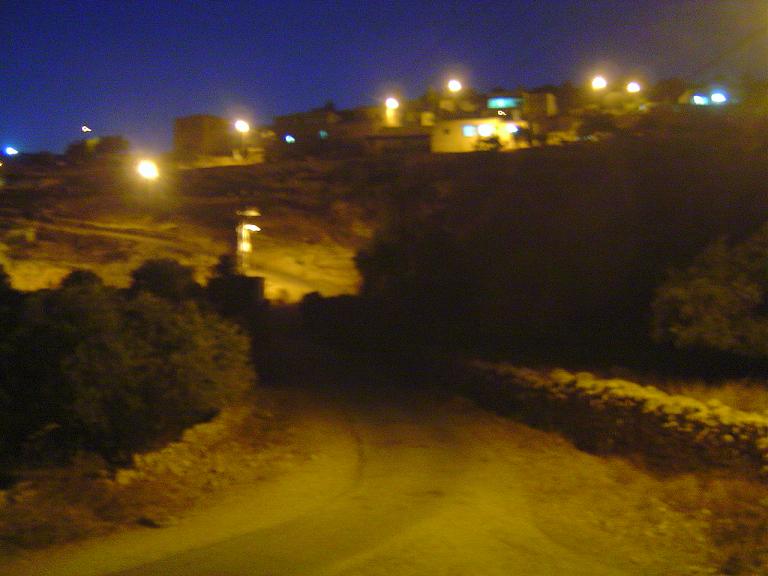
In the foreground, homes on the edge of Dair Ballut village. The bright lights behind are of Ped'Uel, an illegal Israeli settlement. The main road from the Jewish-only Israeli settlement comes from the east and the main road from the Palestinian village comes from the west. They intersect at north-south highway. There is a checkpoint there that is open from 6am to 6pm (according to Btselem). Every West Bank Palestinian vehicle must stop and be checked. Jewish settlers can pass freely 24hrs a day. The checkpoint has been on the edge of Deir Ballut for 18 years, since the settlement was built in 1988.The checkpoint is closed at night. There are many stories of ambulances being stopped after daylight hours. Allegedly, twin babies died while their ambulance waited at this checkpoint . Observing the checkpoint from a rooftop at a friends house in the village, we watched military vehicles move slowly back and forth, searching the darkness with their lights, waiting for Palestinian traffic from the village. I imagined a jailer in a prison hallway, swinging his flashlight and clinking his ring of keys.
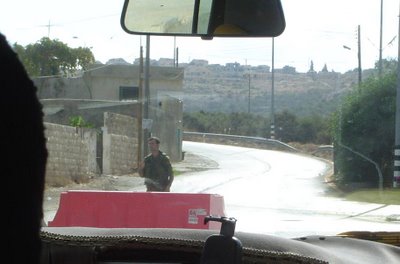
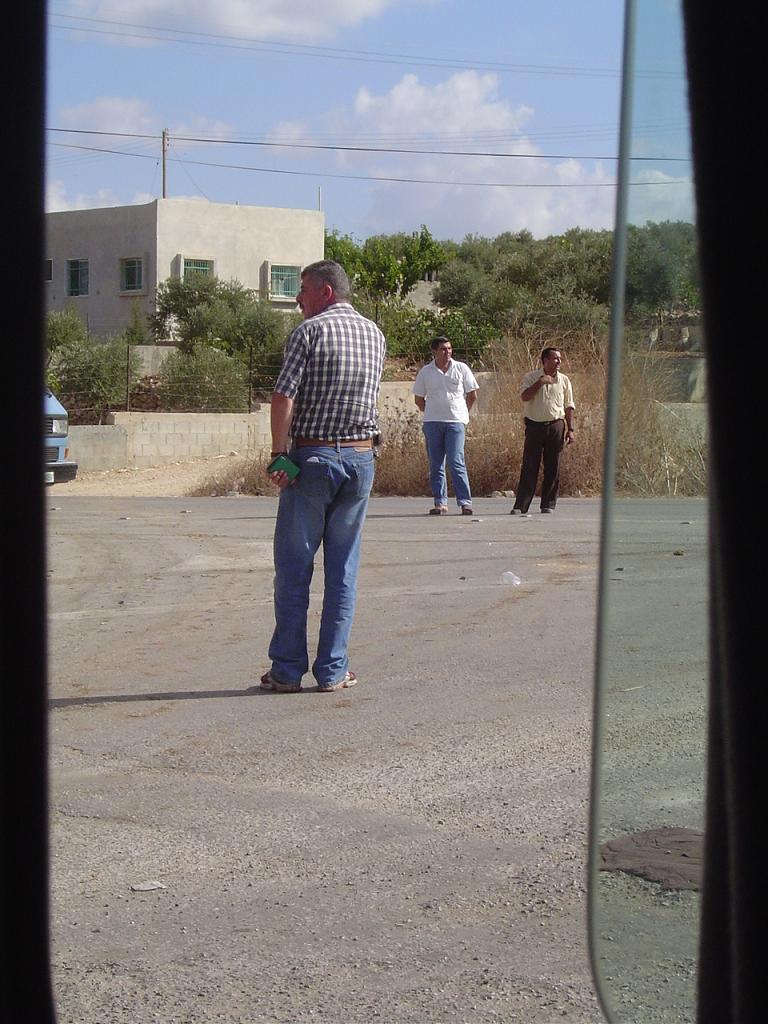
A soldier at the checkpoint on Dair Ballut's main access road, just a few hundred meters from the village.
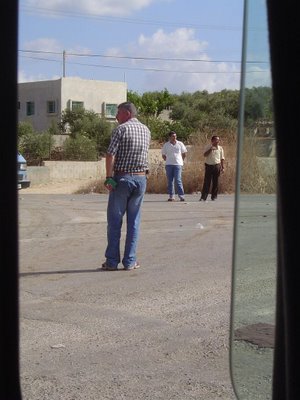
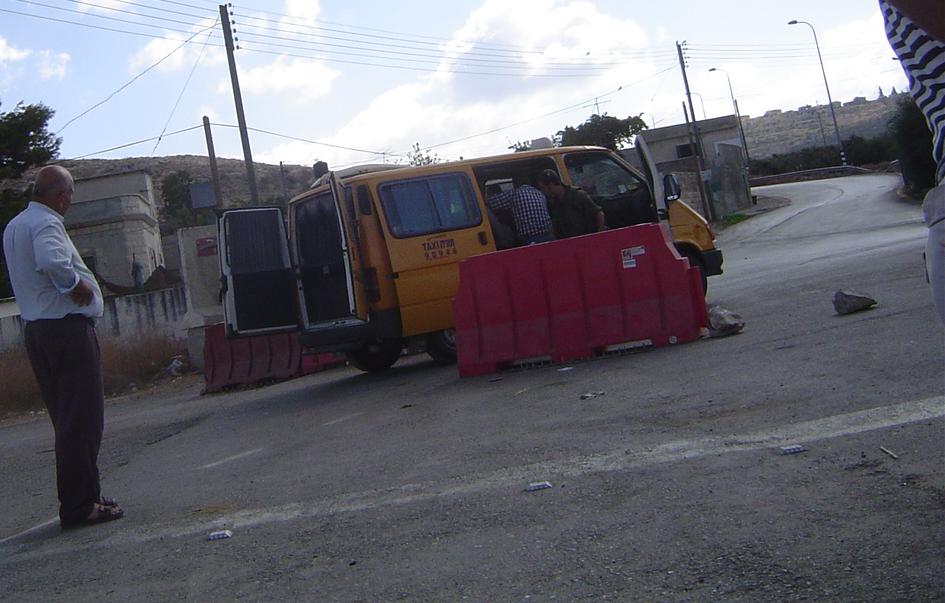
The driver of our "service" (a shared taxi, usually a van) holds our ID's. The green color is the Palestinian "Huwiyyeh," or ID card issued by the Israeli military.
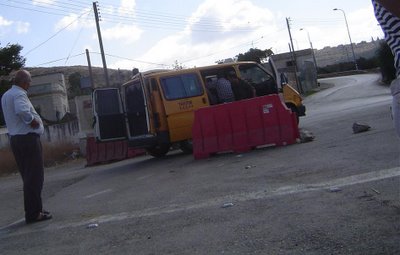
The soldier orders: "All passengers out of the taxi." We and our Palestinian commuter companions wait as our taxi is nonchalantly searched by soldiers at the edge of Deir Ballut village. This chekcpoint stops all traffic between Deir Ballut and the main highway. Traffic from the adjoining Israeli settlement passes through the checkpoint freely. Villagers from Deir Ballut work, visit family and attend Universities in nearby Palestinian cities like Ramallah. However, due to checkpoints like this one (which was established in 1988), the time for what would be a 20 minute trip varies irregularly from 1-3 hours. Most only make the trip twice a week, and rent a room or stay with family at their destination.
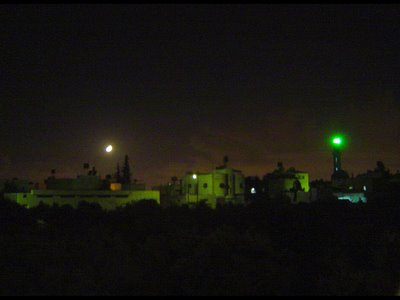
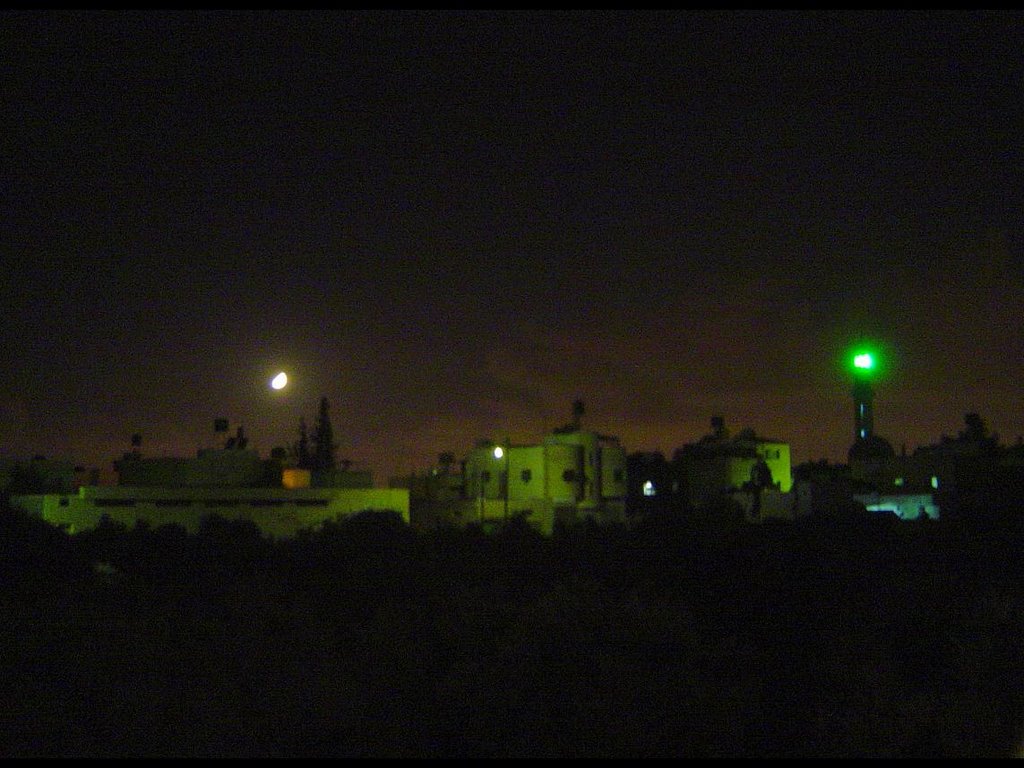
Deir Ballut by moonlight and mosque-light...
Tuesday, August 29, 2006
Monday, August 28, 2006
World's Worst PR Campaign
[PHOTO IN POST ABOVE] The entrance to Bethlehem from Jerusalem.
The truly insane person is so insane that he thinks others also see his hallucinations. I imagine the Israeli military spokesperson: "This isn't a wall, it's a security fence. It's there to stop terrorists. And all who pass through it will feel the spirit of peace! Uh...the sniper tower?? It's for peace!"
But why imagine? You can watch the Israeli military's PR film on the "fence" right here.
Afterward, be sure to readjust yourself to reality by reading Btselem's reports and testimonies about the wall (the leading Israeli human rights organization).
The main argument by the pro-wall crowd is, of course, that the wall was built to prevent terrorism. This may be true in part, but is also partially a lie. The wall is mainly a land grab, and a prison wall. This is most obvious when you see how the fence is routed, and this is why the wall was declared illegal by the World Court,the highest ruling body on internatinal law). It is also obvious when you see the wall in person, and you see how it affects Palestinians, while priviledging Israeli Jews.
Will imprisoning Palestinians on small parts of their land improve Israeli security? Possibly, in the short run. But in the long run, will Palestinians want to make peace after being placed in cages?
Will the wall make more land available for Israeli settlers? Definitely!! "Hey," say the settlers, "No one is farming this land anymore! I wonder why not? Good thing this barrier is here to keep the Arabs out. Let's build! This is Israel now!" (see posts on Jayyous below)
The lie of the barrier being a "fence" is again partial. It is a multiple-fence and trench barrier in most places (Israel claims 97%), but becomes a 25-ft wall in, around, and through Palestinian cities. Cities become prisons, complete with guard towers. Peace be with you.

Palestinian truths on the Bethelhem side of the apartheid wall. Note the reference to US aid for Israel (the reason I care about this so much). Note also the shout-out to Hezbollah.
The truly insane person is so insane that he thinks others also see his hallucinations. I imagine the Israeli military spokesperson: "This isn't a wall, it's a security fence. It's there to stop terrorists. And all who pass through it will feel the spirit of peace! Uh...the sniper tower?? It's for peace!"
But why imagine? You can watch the Israeli military's PR film on the "fence" right here.
Afterward, be sure to readjust yourself to reality by reading Btselem's reports and testimonies about the wall (the leading Israeli human rights organization).
The main argument by the pro-wall crowd is, of course, that the wall was built to prevent terrorism. This may be true in part, but is also partially a lie. The wall is mainly a land grab, and a prison wall. This is most obvious when you see how the fence is routed, and this is why the wall was declared illegal by the World Court,the highest ruling body on internatinal law). It is also obvious when you see the wall in person, and you see how it affects Palestinians, while priviledging Israeli Jews.
Will imprisoning Palestinians on small parts of their land improve Israeli security? Possibly, in the short run. But in the long run, will Palestinians want to make peace after being placed in cages?
Will the wall make more land available for Israeli settlers? Definitely!! "Hey," say the settlers, "No one is farming this land anymore! I wonder why not? Good thing this barrier is here to keep the Arabs out. Let's build! This is Israel now!" (see posts on Jayyous below)
The lie of the barrier being a "fence" is again partial. It is a multiple-fence and trench barrier in most places (Israel claims 97%), but becomes a 25-ft wall in, around, and through Palestinian cities. Cities become prisons, complete with guard towers. Peace be with you.

Palestinian truths on the Bethelhem side of the apartheid wall. Note the reference to US aid for Israel (the reason I care about this so much). Note also the shout-out to Hezbollah.
Saturday, August 26, 2006
Beit Jalla: From Free Fire Zone to Prison

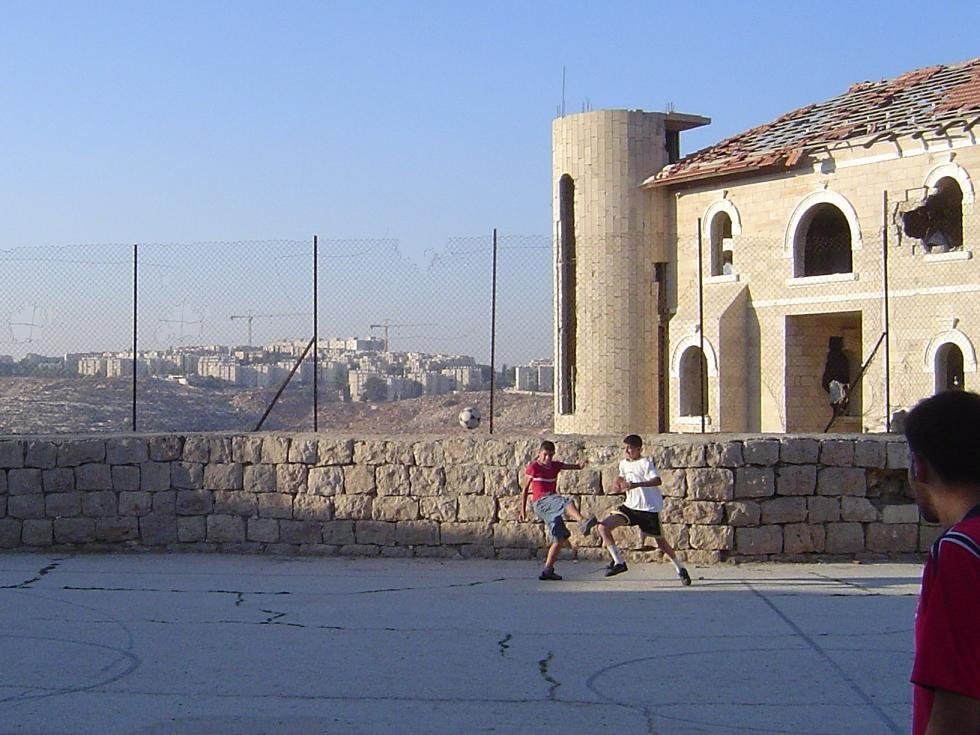
Kids Play Soccer with Israeli Settlement of Gilo in Background on opposite hill. Note ongoing construction (illegal under peace agreements and international law). Note also the shell-damaged Palestinian home in the immediate background. In 2001-02, Palestinians fired small arms toward Gilo. Israel responded with tank and helicopter fire, killing and injuring scores of civilians (see complete post below).

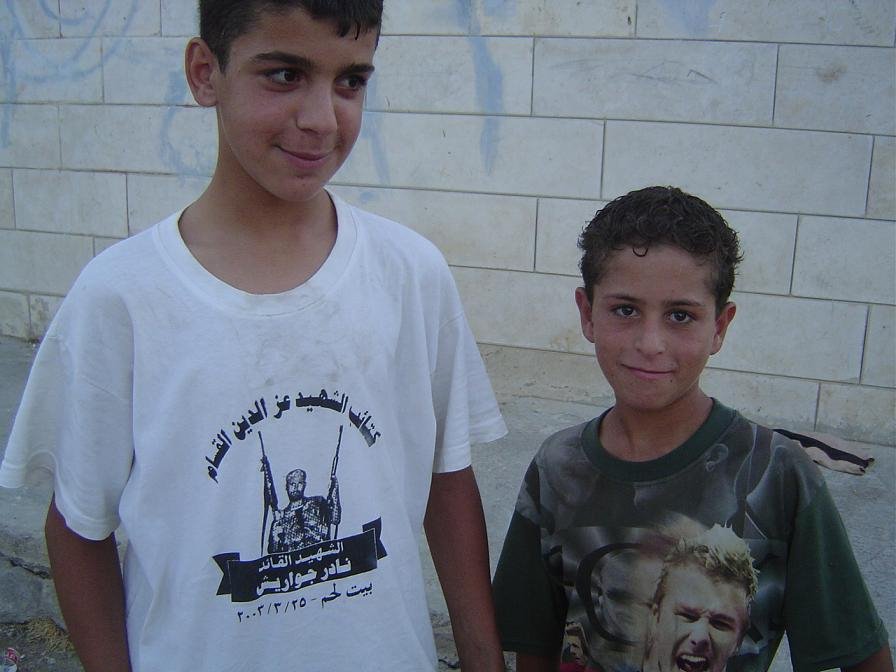
The child on the left is wearing a t-shirt showing the other child's father holding weapons. They explained to me that the father is a martyr. I don't know the circumstances of his death.
Friday, August 25, 2006
Beit Jala: From Free Fire Zone to Prison (2)


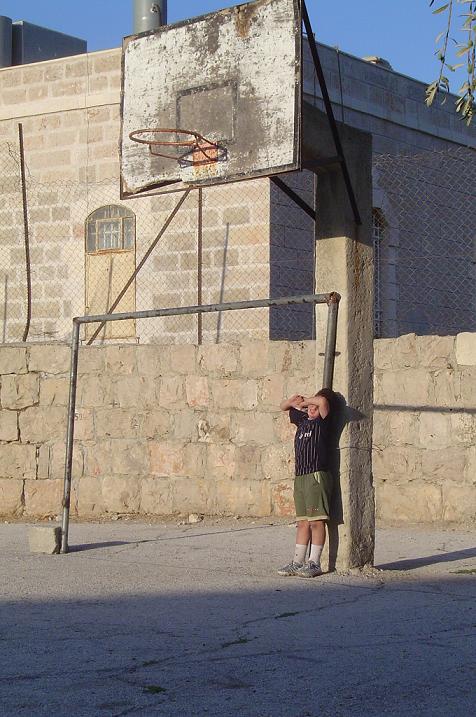
Before I learned about his dad, I had noticed that this kid was among the fastest on the field, sometimes tripping up kids twice his age! That's my "host brother," Issa, on the ground!

[ABOVE] This home was abandoned due to the Israeli shelling, and now is totally destroyed. Hundreds of homes in Beit Jalla were damaged between 2000-2002.
------
Beit Jalla is a village of Christian Palestinians - as an ignorant American I was surprised when I learned this a few years ago... there are thousands of Palestinian Christians living under Israeli military occupation. There are also Christian refugees, "cleansed" from towns and neighborhoods that were swallowed by Israel in 1948. So...Not all Arabs are Muslim. Wow. There are also a smaller number of Muslim families living in Beit Jalla side by side. People here say there is no fighting between Christians and Muslims, though there are sometimes some prejudices and tensions (I've witnessed this from the Christian side - against the Muslims - but I haven't seen Muslim prejudice against Christians). And what about Arab Jews? And Palestinian Jews???? That's another story... -
THE SHELLING OF BEIT JALA
In 2000 and 2001, Palestinian resistance groups would use areas of Beit Jalla to shoot into the neighboring Israeli settlement of Gilo, or at the Israeli checkpoint on the settler highway below the hill. They used rifles (and allegedly also mortars), and the distance is over a kilometer so the shells rarely caused injury. However, at least one Israeli was killed by this gunfire over the couple of years this was happening. As criminal as it is to fire at civilians in Gilo (even if they are illegal settlers, they are still civilians), the Israeli military response, was, of course, typicaly disproportionate (as in Lebanon), and so massive that it has been described as a war crime by human rights organizations. You can read all about it on Btselem's remarkable website.
Following the shelling, Israeli troops occupied Beit Jalla and placed it under curfew for many months in 2002. Curfew means no one can leave their homes, sometimes for weeks on end - with maybe a 4 hour break every few days. It really is collective punishment, putting a whole population in prison. Such measures expose the reality that Israel is not trying to merely defend itself through such operations - they are trying to punishing the whole population. Why? For wanting freedom from occupation. Between reading Btselem reports and talking to people about their experiences in prison, under curfew, at checkpoints, etc., the disdain Israel shows for the lives Palestinians and Arabs in general is crystal clear.
Today, Beit Jalla is no longer under regular military attack, and the gunfire from Palestinians has stopped. However, it is now enclosed, along with neighborhing Bethlehem, behind the "Apartheid Wall." The economy is shattered. Many people worked in Jerusalem, but now hardly anyone has permission to do so. The calm situation allows life to go on in the Gilo settlement. Young men have told me "No one is thinking of attacking Israel now. People are only thinking of how to eat."
Testimony given to BtSelem: (CLICK FOR FULL REPORT)
Fatma 'Ali Hamed Zawareh, described how her daughter was wounded on May 6th, 2001:
Around 7:15 A.M., three of my children left the house for school, which lies on the main road leading to Bethlehem. The three who went were Rawan, who is twelve, Tareq, who is nine, and Mahfuz, who is eight. I have two other children: Rana, who is four, and eighteen-month-old Raniyeh.
About 7:30, I heard the sound of gunfire, and fifteen minutes later shells began to fall near the houses. Around 10:30, when I was hiding with my two small children in an interior room of the house, I saw through the window my three eldest children arriving home from school and hiding behind a wall on a field about twenty meters from the house. They were crying and frightened. The shelling was still going on and they couldn't reach the house. I decided to go and get them and I managed to get to them. I took Tareq with my right hand and Mahfuz with my left hand, and Rawan walked in front of me. Suddenly we heard the shriek of a shell. It exploded on the dirt road, about a hundred meters from us, and Rawan cried out. I saw that she had been wounded above the right eye. Blood was flowing from the wound. I picked her up and shouted for help. Tareq and Mahfuz cried and screamed. A few minutes later, National Security personnel arrived and took Rawan to the ambulance that was on the main road, at the entrance to the neighborhood. It took her to the government hospital in Beit Jala. The physicians in the emergency room stopped the bleeding... Now she is taking medication to stop the internal bleeding in her right eye.
Thursday, August 24, 2006
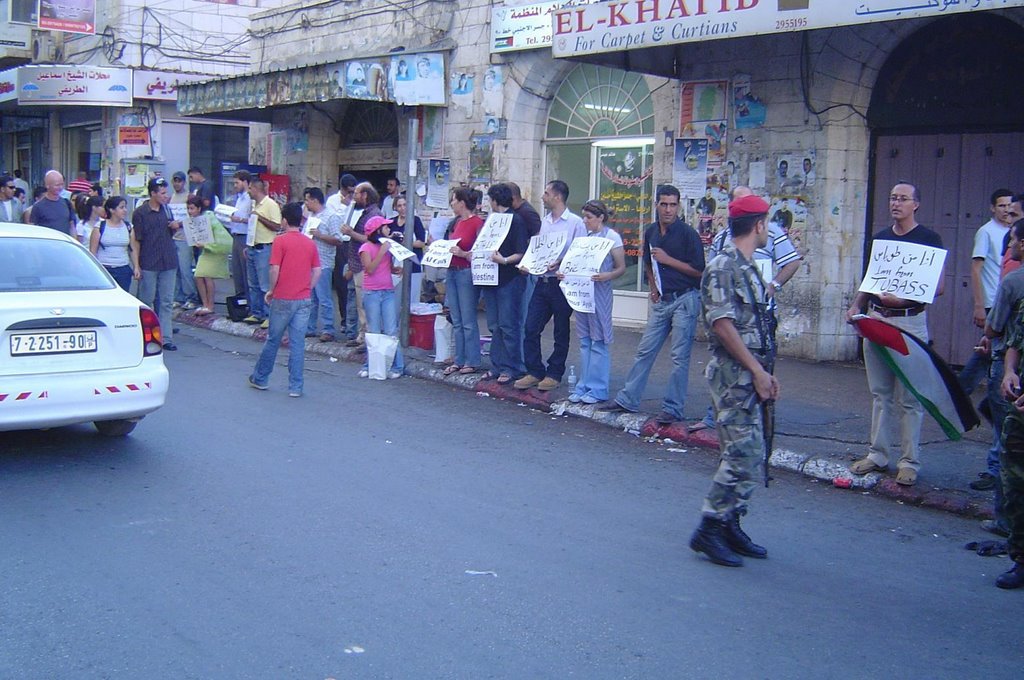
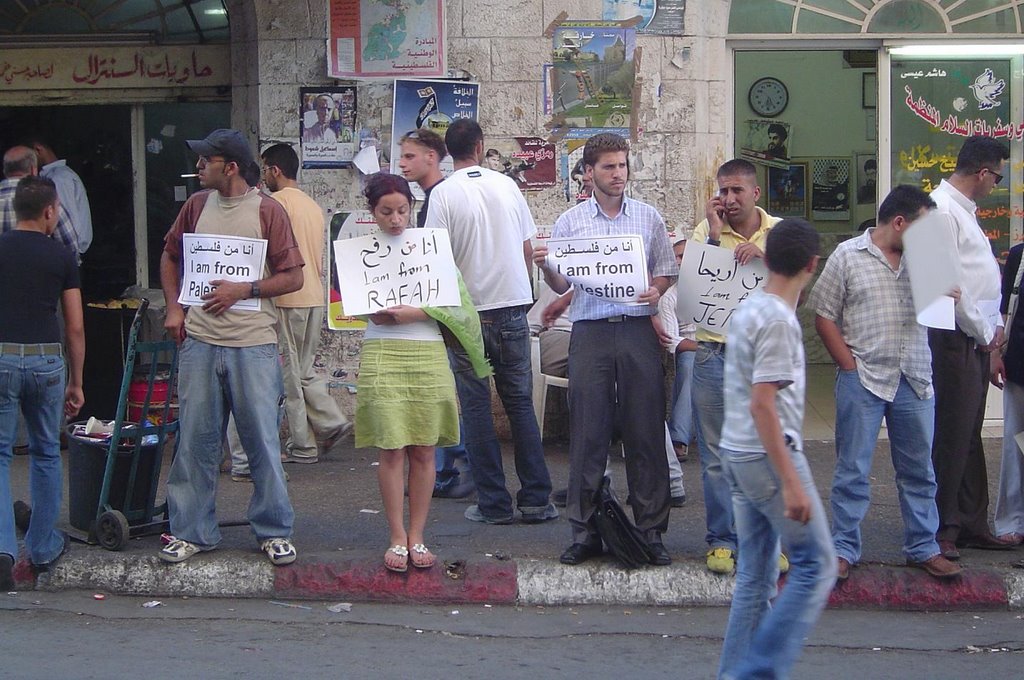
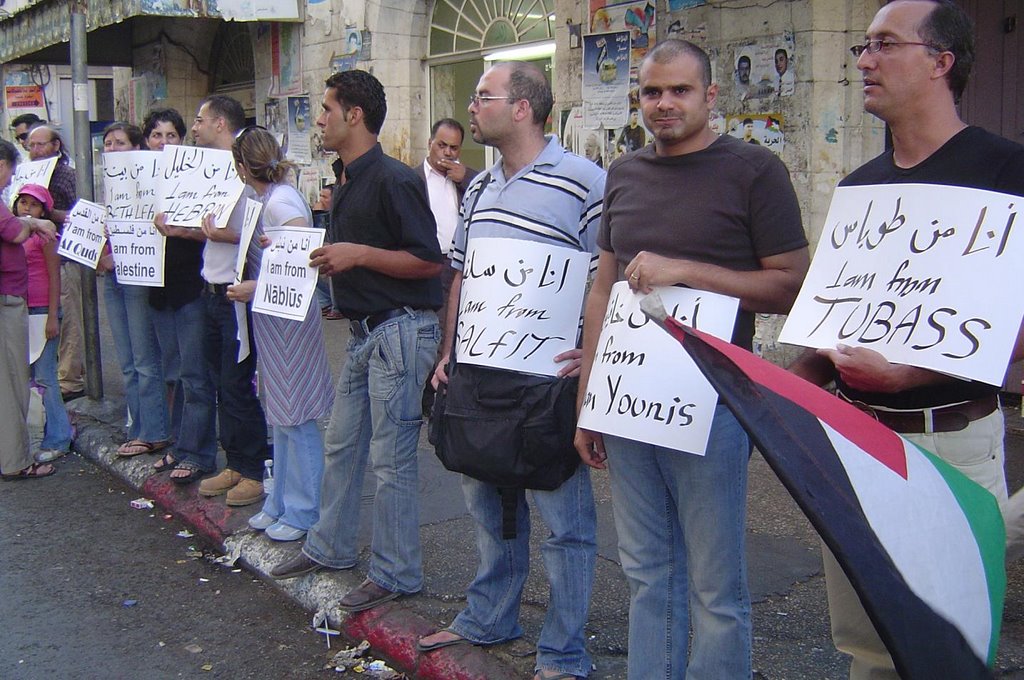
No to Cantons: Palestine Remebers Itself


[ABOVE] - Click to enlarge photos
Palestine Remembers Itself
An awareness-raising action by Palestinians in Ramallah. Their audience - other Palestinians! Participants told me: "Palestine has been cut into Cantons [separate pieces] so that we no longer percieve it as one country, one piece of land. Most of our signs say "I am from Palestine," but we also say, 'I am from Tubas,' 'I am from Jenin,' 'I am from Nablus'" to remind ourselves that this is all Palestine. Some of us in the community are even forgetting the names of other Palestinian cities!"
For more on the "cantonization" of Palestine, see the Israeli Committee Against Home Demolitions' website section on "The Matrix of Control."
Using checkpoints and roadblocks and a system of permits, the Israeli occupation keeps people divided into a few local areas, or "cantons." So people in Ramallah are no longer visiting people in other major cities, etc. It's not total - people still move between these areas, but it's difficlut or extremely difficulut, depending on where you want to go, where you are from, and the arbitrary "mood" of the military authorities. Palestinian travel to and from the Gaza Strip, however, has been prohibited for years, separating families and friends. As the isolation of Gaza has increased, so has Israeli military violence directed against it. Last month over 200 people were killed in Gaza. It seems that the northern section of the West Bank, Nablus, Tulkarem, Jenin, etc., is now being "turned into a Gaza." The largest canton, it is being increasingly cut off, and increasingly attacked by the Israeli military.
Monday, August 21, 2006
Yanoun's New Crisis: Keeping the lights on
Yanoun is a very small village that has been under attack from settlers for several years. For the basic story, see my 2003 post on Boston to Palestine's website:
Yanoun village is divided into two sections, upper and lower. This is Lower Yanoun.

The road from Lower to Upper Yanoun is newly paved, and the Belgian goverment recently put in these power lines. For the first time, Lower and Upper Yanoun have electricity 24hrs a day! For years, they relied on a diesel generator that supplied power from 7pm-11pm each evening...and then all went dark.


LEFT - Upper Yanoun and the Israeli Settlement. A small collection of houses on the hillside form Upper Yanoun. The buildings at the top of the hill belong to an Israeli settler named Avri Ran, who has terrorized the villagers with his gang (more on this later). The total population of Upper and Lower Yanoun is about 100 people, half of them kids.

Yanoun electrified.

Photo: Looking down from the houses up upper yanoun at the new road entering the village.
Upper Yanoun's #1 problem, along with all the other problems faced by Palestinians, has been with the violent settlers who have taken nearly all the villages land and captured all the hilltops surrounding Yanoun. When the villagers first got their electric generator some years back, the settlers came in and burned it, saying "You don't have permission to have electricity."
Today there is a new crisis: The Israeli military has said they will tear up the road and cut the electricity? Why? The Israeli military occupation authorities work hand in hand with the settlers. Today, it is the Israeli military who is saying "you don't have permission to get electricity." So Yanoun now faces a legal struggle to keep the road and the power lines.
Yanoun village is divided into two sections, upper and lower. This is Lower Yanoun.

The road from Lower to Upper Yanoun is newly paved, and the Belgian goverment recently put in these power lines. For the first time, Lower and Upper Yanoun have electricity 24hrs a day! For years, they relied on a diesel generator that supplied power from 7pm-11pm each evening...and then all went dark.


LEFT - Upper Yanoun and the Israeli Settlement. A small collection of houses on the hillside form Upper Yanoun. The buildings at the top of the hill belong to an Israeli settler named Avri Ran, who has terrorized the villagers with his gang (more on this later). The total population of Upper and Lower Yanoun is about 100 people, half of them kids.

Yanoun electrified.

Photo: Looking down from the houses up upper yanoun at the new road entering the village.
Upper Yanoun's #1 problem, along with all the other problems faced by Palestinians, has been with the violent settlers who have taken nearly all the villages land and captured all the hilltops surrounding Yanoun. When the villagers first got their electric generator some years back, the settlers came in and burned it, saying "You don't have permission to have electricity."
Today there is a new crisis: The Israeli military has said they will tear up the road and cut the electricity? Why? The Israeli military occupation authorities work hand in hand with the settlers. Today, it is the Israeli military who is saying "you don't have permission to get electricity." So Yanoun now faces a legal struggle to keep the road and the power lines.
Subscribe to:
Posts (Atom)